
Lái Yì Bēi (来一杯 )
On language as the first passport

May 5, 2026: Frankfurt → Beijing
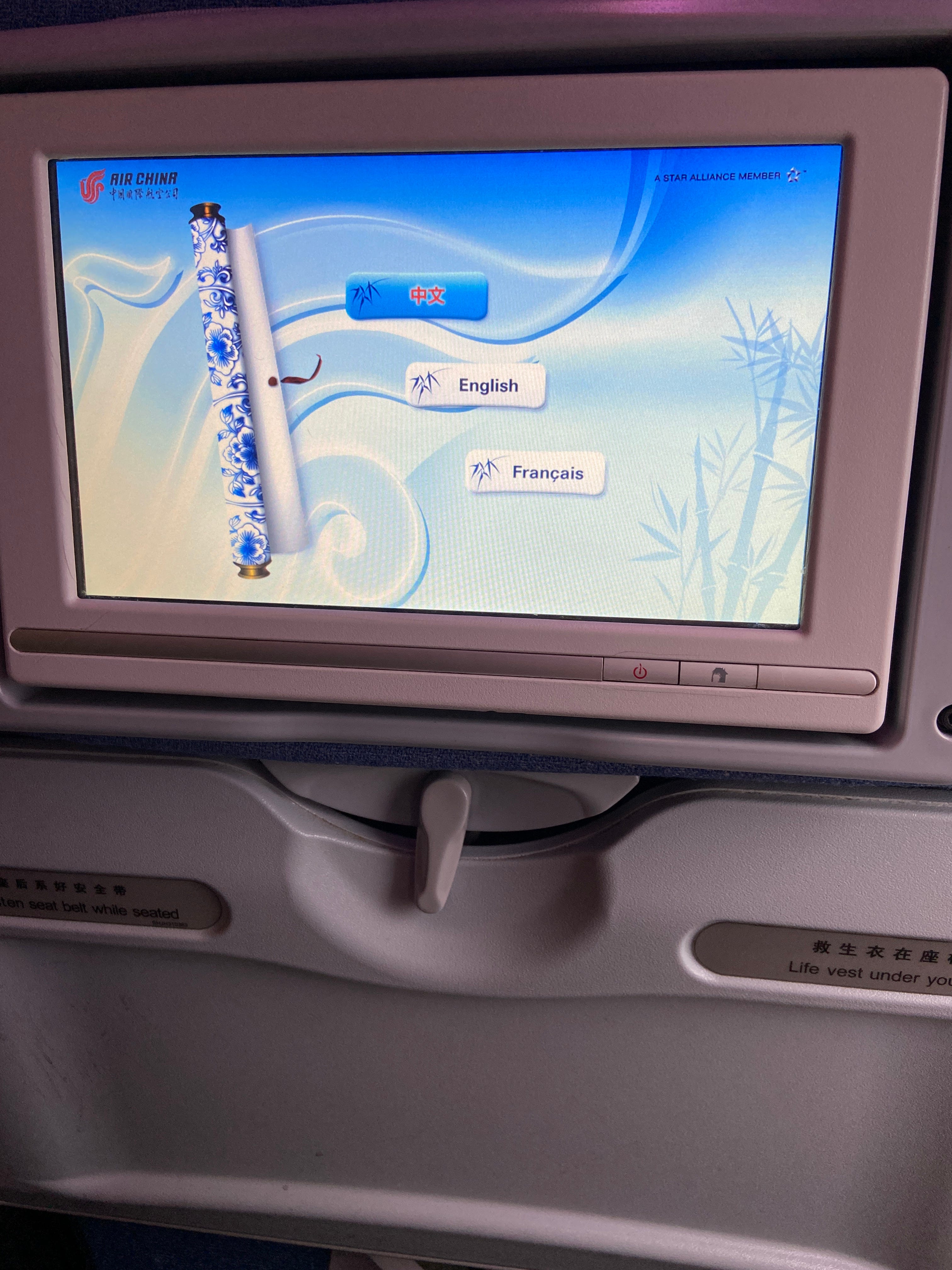
My soft re-entry into China begins as soon as I set foot on the plane. The two passengers ahead of me are greeted in English. The flight attendant glances at me and in Chinese, warmly sends me down my aisle. I feel surprised that the words land so naturally in my system - there is not the micromoment of processing I expected from not having used it much for over a decade.
Airbound: In English, the attendant asks the two Spaniards in my row what they want to drink. She switches fluidly to Chinese when it comes to me, seated by the window. In Chinese, I ask her if the carton in the corner of her cart is coconut water, and she says yes, do I want some? I give a quick nod.
She replies with 来一杯 (lái yí bēi / here comes a glass) - a colloquial phrase I’ve always heard in my family growing up, but that I didn’t know could be used in this more professional context. The casualness of this phrase carries a disarming feeling of assumed welcome.
Moments of Double Privilege
Let’s rewind a little bit. While departing Frankfurt for Beijing, you need to leave the EU, which requires a passport check. My flight was delayed arriving, and I see the long, snaking line for non-EU passport holders - a queue of highly stressed folks, all presumably with urgent connecting flights. 40-50 people - likely another half hour to get them all through.
They are understandably frustrated, and some try negotiating with the security guard to get the folks with tighter transfers to move to the front. The guard unhelpfully comments, “You should have arrived earlier.” I want to grab him and shake him until he understands that airline delays are not the passengers’ responsibility.
But I also have a tight transfer. And the line for EU passport holders is completely clear. No waiting whatsoever. I have a brand new German passport. I am suddenly both empowered and ashamed that I have this ticket, as only a few months ago, I would have been in the same situation as the non-EU travellers.
But today I’m going to use this passport. Beyond the automatic scanning machine lies a German border control booth. It is the first time I’m crossing as a German citizen. As I approach the booth, I ask in German, rather stupidly, if there’s something else I’m supposed to do, and the border guard waves me by without even looking at me. It is pure elation - and I walk through unhindered.
So this is what European privilege feels like.
I love it. I hate it.
12 hours later, a Mirror Universe
Arriving in Beijing, waiting for passport control. Two Germans are ahead of me, and they are already frustrated because at every transfer, they are asked the same questions and made to take the same pictures. They have a flight to catch in seven minutes. One of them asks redundantly, “Do we have to do this every time?” then catches himself and adds, “I just want to know for next time,” as though he knows this question will not help him move through any faster.
Behind them, I allow myself an inner smile. The part of me that saw myself in the long snaking line of non-EU passport holders feels some cosmic justice for these two Germans to be given a hard time (in fairness, still less of a hard time than the EU border control), and for them to feel the smallness of their situations compared to the looming regulations of the Chinese government. Part of me wants to help them. But I refrain, and with some grim satisfaction, watch them struggle with their discomfort.
I am next in line, and mildly concerned about my re-entry into China as a former citizen, now entering on a Canadian Passport. But as I continue to experience, language is the real door opener. As with others before him, the border control guard addresses me in Chinese. When asking my intention for visiting, he preempts himself by answering his own question: “Visiting relatives?”
To which I simply had to reply yes. After more than a decade away, and even with a renounced Chinese citizenship, the border control barely even needs me to speak. I am through in a matter of seconds.
These two crossings have been the easiest I have experienced in many years. I viscerally understand now that language is a kind of passport, and a passport is a kind of language. What power it is to wield these keys of status and communication. Coming to Germany over a decade ago, I had neither. On this journey, I feel what it is to have both.
What does it mean now to hold the keys, while remembering that for many, the door remains locked, with a long, snaking line stretched out in front?
„I love it. I hate it“ „A language is kind of passport. A passport is a kind of language“ really enjoying these! They show the tension but also the complementary nature between opposites very eloquently.
Woooow what happens next???